In the foothills of Western North Carolina, a revolution is taking place on two wheels.
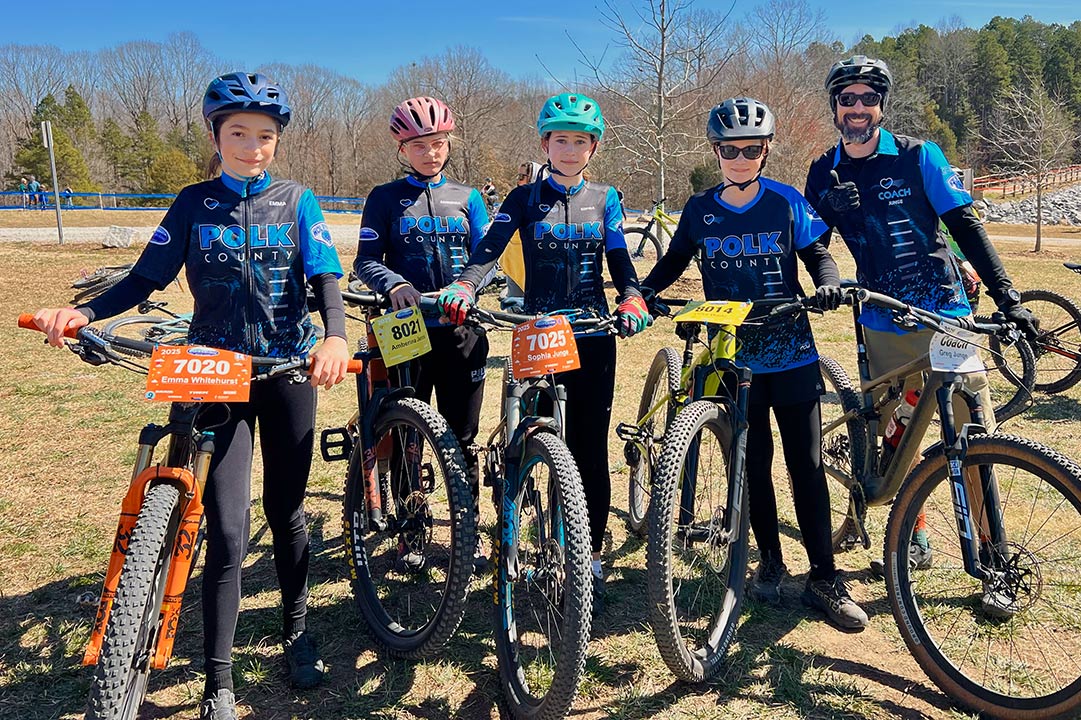
The Polk Wolverines Mountain Bike Team, barely in its first season, is already making an impact on the landscape of youth sports in the area.
“I was on a personal journey to try and find a deeper ‘why’ for inspiration for work,” says Greg Junge, founder and head coach of the Wolverines. “I decided it would be really cool to support a mountain bike team for youth and provide support for the kids’ energy and resources to inspire me to work harder.”
Get PolkSports delivered to your inbox
Sign up for our free newsletter →
What began as personal soul-searching has blossomed into a full-fledged program with dedicated coaches, enthusiastic young riders and community support that has surprised even Junge himself.
The timing couldn’t have been better. When Junge received news that trails next to Polk County Middle School were finally becoming a reality, he seized the opportunity to establish a local chapter of the North Carolina Interscholastic Cycling League (ICL), part of the National Interscholastic Cycling Association (NICA).
The newly soft-opened Little White Oak Mountain Phase 1 trail at Polk County Recreation Complex couldn’t have arrived at a more opportune moment for the fledgling team. Since mid-March, the four miles of freshly cut trails have added to the team’s home base and training ground.
“I got a special invitation to ride before almost anyone else on our new trails at Little White Oak,” Junge recalls with obvious enthusiasm. “The kids, even those I coach in cross country running part of the year, have been loving it.”
The Wolverines, open to boys and girls 17 and under, practice Tuesday and Thursday afternoons on the Recreation Complex trails, which have become the lifeblood of the program. For middle school students, the location is ideal — they can simply walk down after school, eliminating the transportation barriers that often limit participation in extracurricular activities.
“I couldn’t imagine trying to have practice without the trails nearby,” Junge said. “It is the blood for the team and makes it so nice that the middle school kids don’t need to have transportation to a trail head. Most of them walk down at 3:10 when they get out.”
Building Skills, Building Character
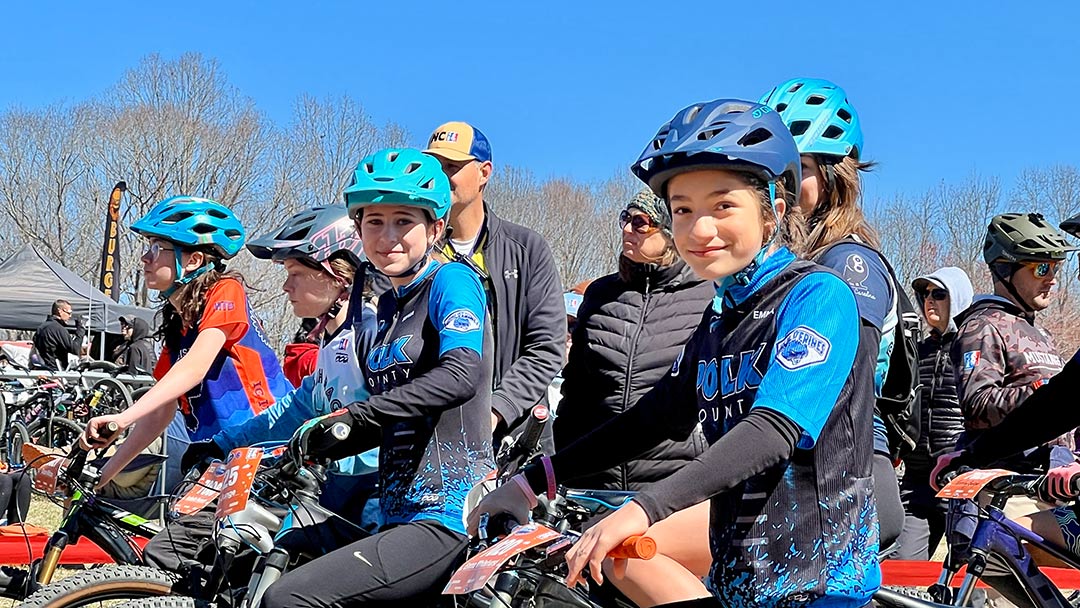
A typical two-hour practice isn’t just about hitting the trails at full speed. Following NICA’s philosophy of developing “athletes and mountain bikers for life,” coaches focus methodically on fundamentals: bike handling, braking, cornering, and even trail-side repairs.
“We don’t just throw kids on the trail,” Junge explains. “NICA is about growing athletes and mountain bikers for life, you have to take it slow to not run off beginners. The best part is that even the most advanced athlete can always make progress.”
The team’s coaching staff — Graham Caparulo, Chuck Hooker, Morgan Leake, Matt Pickett, Patricia Streit and Lee Whitehurst — work alongside Junge to ensure each two-hour session builds both skills and confidence. Practices blend on-bike handling skills with team-building games, trail riding, strength conditioning and post-ride stretching.
“Once we cover the basics, we have been hitting the trail but emphasize unique skill at each practice session,” says Junge. “Even though NICA isn’t just about racing, we have been training the kids to compete at the state level, and the teams have very competitive athletes.”
Behind the scenes, the logistics of launching such a program have been daunting. Sam Stenard, Junge’s operations manager at his construction company, has been instrumental in organizing the team, handling everything from spreadsheets to web forms.
“Luckily I have a very talented right-hand man in my construction company,” Junge acknowledged. “Sam has been paramount at getting the team organized. He is a whiz on the computer, spreadsheets and web forms.”
Mountain biking presents unique financial challenges compared to traditional school sports. The equipment demands are substantial, and travel expenses pile up quickly when the closest competition is a 2.5-hour drive away, with most races closer to five hours from Polk County.
“Many families can’t make the time and financial commitment to make these events,” Junge said. “Across the league statewide, this is a big deal for all teams here in North Carolina. Our state is very long east to west.”
Despite these obstacles, community support has been remarkable. Local residents have contributed gear and monetary donations, while the trail crew has embraced the team’s use of the newly constructed paths as well as existing trails.
“We have been getting so much positive feedback, donations of gear, you name it,” Junge says. “The trail crew was so happy to see us using the trails immediately.”
Growing Together
The synergy between the team and the trails presents a clear win-win scenario. With the recent soft opening of the four-mile Little White Oak Mountain Phase 1 trail, the foundation is set, but Junge sees much more potential on the horizon.
“We are about to see a grand opening for phase one at LWOM later this year, and with just four miles of trail with another 10 to 12 more to go, we will be eager to see substantial funding help get more trails installed in Polk County,” he explained.
This infrastructure development is crucial for the team’s long-term vision. “I see the team helping grow the trails and the trails helping grow the team,” Junge said. “It’s a win-win.”
As the Wolverines prepare for their next race on April 12-13 at Browns Creek Bike Trail in Elizabethtown, Junge’s vision extends far beyond competition results.
The season, which began with practices in December, runs through mid-May. But for Junge and his coaches, this is just the beginning of something much bigger.
“I want to see our kids enjoy mountain biking and time outdoors, fall in love with the wind on your face and the joy of physical fitness,” he says.
Long-term, Junge hopes to elevate the program to the high school level, aligning with NICA’s goal of making mountain biking a mainstream school sport. The broader ambition is nothing less than revitalizing America’s standing in international cycling competitions, including the Olympics and World Cup races.
“The idea is to make mountain biking a mainstream school sport, grow the awareness and support the sport nationally, and get USA back on the world map at Olympics and the world cup races,” Junge explained. “This national program is developing life-long lovers of the sport and teaching kids how to be their best.”
For now, though, the focus remains on what happens when students hit those trails behind Polk County Middle School — the transformation visible on their faces as they discover the freedom and challenge of mountain biking.
“You can see them just light up out there,” Junge says. “It’s amazing.”